At some point during your first week in Oaxaca, someone will hand you a small clay cup of something clear and smoky, and say — unhurriedly, with complete sincerity — “sip it slowly.”
This is mezcal. And if you do what they say, it will rearrange your understanding of what a spirit can be.
Mezcal is having its global moment, appearing on cocktail menus in New York, London, and Tokyo, stocked at airport duty-free, reviewed by publications that once covered only wine. Most of that content gets it subtly wrong — treating mezcal as tequila’s smokier, hipper cousin rather than what it actually is: one of the oldest, most complex, and most geographically specific spirits on earth.
This guide is for travelers who want to understand it properly — and drink it better.
Mezcal vs. Tequila: The Relationship Explained Once and for All
Here’s the thing most people get backwards: tequila is a type of mezcal, not the other way around.
Mezcal is the umbrella term for all spirits distilled from agave in Mexico. Tequila is a specific, legally defined subset — made exclusively from one agave variety (Blue Weber) in one region (primarily Jalisco). Think of mezcal as “wine” and tequila as “Champagne.” Champagne is wine, but wine is not Champagne.
The key differences:
Agave variety: Tequila uses only Blue Weber agave. Mezcal can be made from over 40 different agave species — each producing a dramatically different flavor profile.
Region: Tequila comes from Jalisco and four other designated states. Mezcal can be produced in nine states, with Oaxaca accounting for the vast majority — around 80% of certified mezcal production.
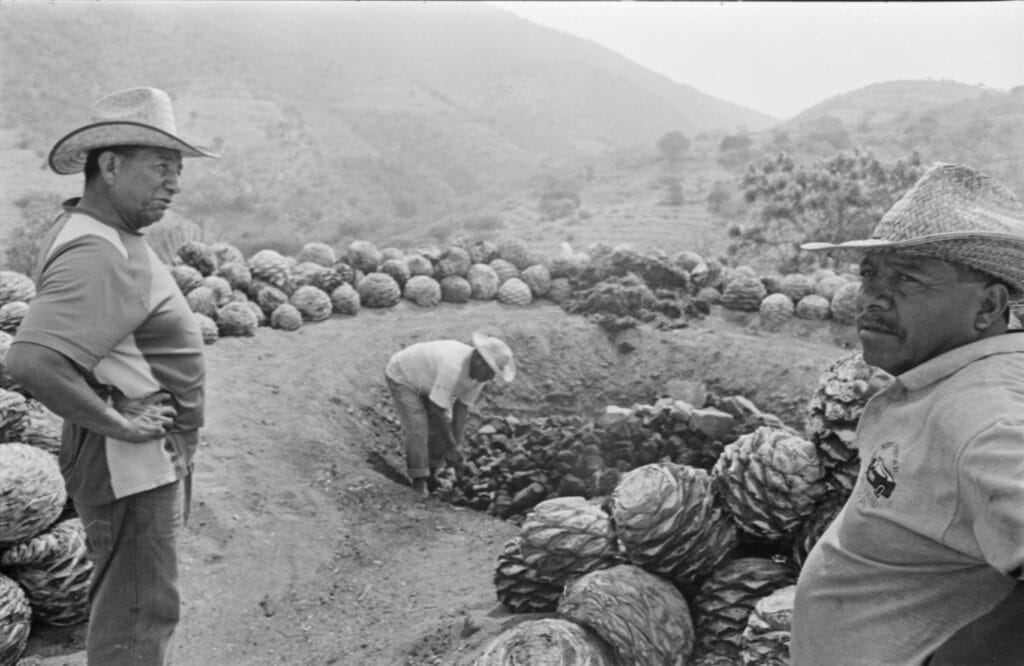
Production: This is where the flavor difference comes from. Tequila agave is steam-cooked in above-ground ovens. Mezcal agave is roasted in underground earthen pits lined with volcanic rock and burning wood. That slow, smoky, underground roasting is what creates mezcal’s signature character — earthy, complex, and yes, smoky, though the degree varies enormously by producer and agave type.
Scale: Most tequila is industrially produced. Most quality mezcal is still made in small batches by family producers (maestros mezcaleros) using methods unchanged for centuries.
How Mezcal is Made: The Process Behind the Flavor
Understanding the production process is what makes mezcal drinking genuinely interesting rather than just trendy. Every step leaves a mark on the final flavor.
1. Harvesting the Agave The agave plant — called maguey in Mexico — must mature fully before harvest. Espadín, the most common variety, takes 6–8 years. Tobalá can take 12–15. Tepeztate takes up to 25–35 years in the wild. When mature, the leaves are trimmed away to reveal the piña — the heart of the plant, resembling a giant pineapple, weighing anywhere from 50 to 300 pounds. This is harvested once, and the plant dies. The rarity and maturity time of the agave variety directly determines the bottle’s price.
2. Roasting in the Pit The piñas are placed in a conical pit dug into the earth — the palenque — lined with volcanic rocks that have been heated by burning wood for 24 hours. The piñas go in, and the pit is covered with dirt and left for 3–5 days. This slow underground roasting caramelizes the sugars, concentrates the flavors, and — crucially — infuses the agave with the smoke that is mezcal’s most recognizable characteristic.
3. Crushing Once roasted, the piñas are crushed to extract the juice and fiber. Traditional producers use a tahona — a massive stone wheel, sometimes turned by a horse — rolling over the roasted agave on a circular stone platform. The tahona method is slow and labor-intensive; some producers have moved to mechanical shredders, which is faster but generally considered to produce less complex spirits.
4. Fermentation The crushed agave — juice and fibrous pulp together — is placed in wooden vats or animal hides and left to ferment naturally, using wild airborne yeasts. No commercial yeast is added in traditional production. This fermentation can take anywhere from a few days to several weeks depending on the weather, the altitude, and the producer’s preference. The wild yeast fermentation is a significant contributor to the unique character of each batch.
5. Distillation Distilled twice in clay pots or copper stills. Ancestral mezcal — the most traditional category — must use clay pot distillation. The small batch sizes and traditional vessels produce a spirit with more character and variation than industrially distilled alternatives.
6. Bottling Most artisanal mezcal is bottled unaged (joven or blanco) — the agave’s natural flavors preserved without oak influence. Aged mezcal (reposado and añejo) exists but is less traditional and generally considered less interesting by serious mezcal drinkers, who feel that aging suppresses the spirit’s native character.
The Agave Varieties: Your Flavor Map
This is the most useful thing to understand about mezcal. The agave variety determines the flavor more than anything else — including the producer.
Think of it like grape varieties in wine. Just as Pinot Noir and Cabernet Sauvignon are both red wine but taste dramatically different, espadín and tobalá are both mezcal but taste almost nothing alike.
Espadín — The most common, accounting for around 80–90% of all mezcal production. Cultivated, matures in 6–8 years, and produces an approachable spirit: balanced, moderately smoky, with notes of roasted agave, citrus, and tropical fruit. The best starting point for mezcal newcomers. The quality ceiling is high — exceptional espadín from a skilled mezcalero can be extraordinary.
Tobalá — The darling of the mezcal world. A small, wild agave that grows at high altitude in rocky soil. Doesn’t propagate by offshoots, so each plant must grow from seed — adding to its scarcity. The mezcal is delicate and floral, with earthy minerality and a creamy texture. Lighter in body than espadín. Bottles typically run $80–$150+.
Tepeztate — The rarest and most extraordinary. Takes 25–35 years to reach maturity in the wild, growing on steep cliffs in near-vertical terrain. The mezcal is robust and earthy with a wild, almost untameable quality — every batch is genuinely different. When you find it at a mezcalería, order it.
Arroqueño — A giant agave that grows for 20+ years before harvest. Produces a rich, layered spirit with floral, citrus, and earthy notes. One of the more complex varieties available.
Madrecuixe / Karwinskii family — Tall, narrow plants that resemble logs more than pineapples. The mezcal is dry, woody, and mineral-driven with an herbal nose. All karwinskiis have a ‘green’ herbal nose, but because there are so many varieties, the mezcals can vary a lot.
Mexicano — Full-bodied, fruity and smoky, with a distinctive touch of anise. Relatively rare outside Oaxaca.
Cupreata — Common in Guerrero state. Aromas of ripe tropical fruit with earthy notes of black pepper.
A practical note: When you’re at a mezcalería or buying a bottle, the agave variety should be listed on the label. If it just says “mezcal” with no agave variety specified, that’s a red flag for industrial production. Quality mezcal always tells you what it’s made from.
The Three Categories: Ancestral, Artesanal, and Industrial
Mexican law classifies mezcal into three production categories — and knowing the difference protects you from spending good money on a mediocre product.
Ancestral Mezcal — The most traditional. Agave must be pit-roasted, crushed by hand or stone wheel, fermented in natural containers (wood, hide, or stone), and distilled in clay pots. Small batches, highly variable, and the most expensive. This is what the best mezcalerías specialize in.
Artesanal Mezcal — Allows some modern equipment (mechanical shredders, copper stills) while maintaining traditional roasting and fermentation methods. The majority of quality craft mezcal falls here. Still excellent; many of the best-known small-batch brands are artesanal.
Mezcal (Industrial) — The commercial category, allowing autoclaves, diffusers, and other industrial methods. The resulting spirit can be fine but lacks the depth and character of the other categories. Most mass-market bottles fall here.
On the label: Look for “Ancestral” or “Artesanal” on the bottle. If it just says “Mezcal” with no category designation, it’s the industrial tier.
How to Drink Mezcal: The Right Way, and Why It Matters
The first rule is the one you’ve probably already heard: drink it neat, at room temperature, from a small vessel.
The traditional vessel is a copita — a small clay cup — or half of a dried gourd (jícara). The shape concentrates aroma, keeps the temperature stable, and feels right in a way that a rocks glass doesn’t. Many mezcalerías will serve you in one of these; if they’re using a standard cocktail glass, that tells you something about their approach.
No salt. No lime. These are tequila accompaniments, specifically designed to mask the rough edges of cheap mixto tequila. Adding them to a quality mezcal is the equivalent of adding ice cubes to a fine Burgundy. Mezcal producers will wince visibly if you ask.
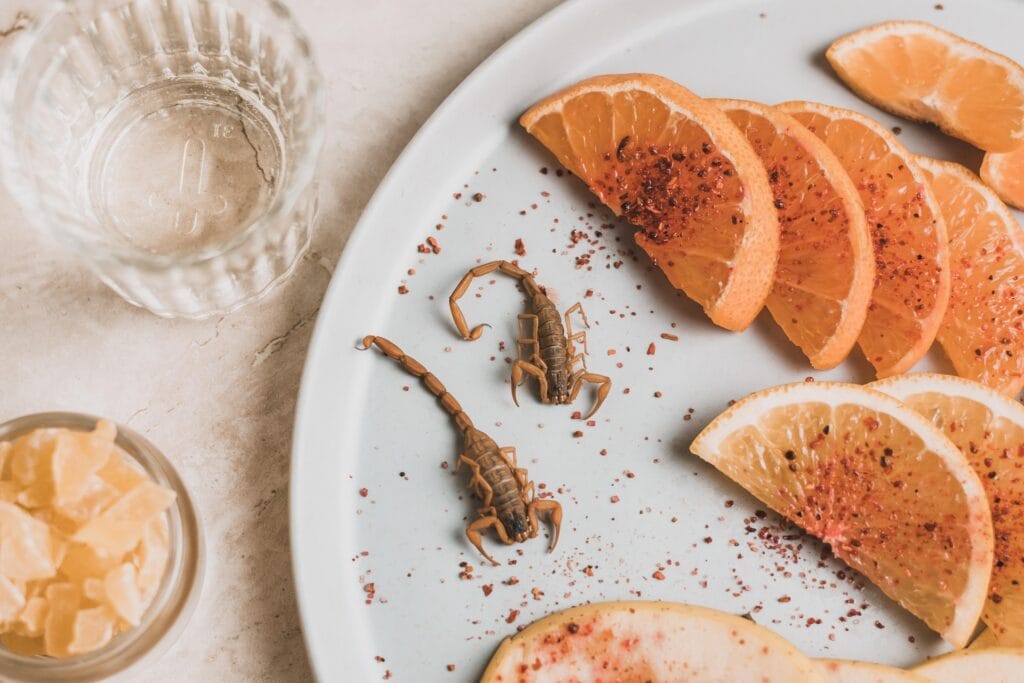
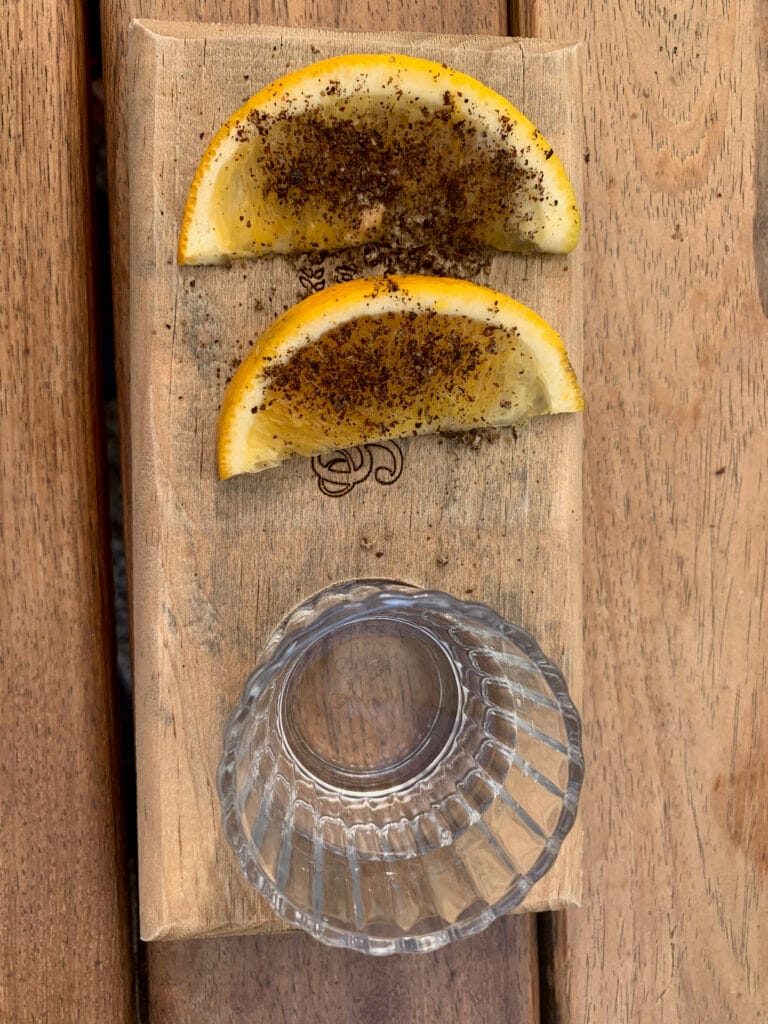
What you will sometimes see served alongside: A slice of orange, a small dish of sal de gusano (worm salt — made from ground agave worms, chili, and salt), and occasionally chocolate. These are traditional Oaxacan accompaniments, offered as palate cleansers between sips rather than flavor masks. The orange and worm salt combination is genuinely excellent. Try it.
Sip, don’t shoot. Mezcal is not a shot spirit. The complexity takes time to open up — flavors evolve from the first sip to the finish in ways that happen over seconds, not milliseconds. A standard pour at a good mezcalería is small deliberately — enough to taste properly, not enough to rush.
Let it sit briefly before the first sip. After pouring, wait 30 seconds. The aromas open up considerably.
Reading the pearls: Experienced mezcaleros evaluate quality by shaking the bottle and observing the bubbles (perlas) that form. Large, fast-dissipating bubbles indicate lower alcohol; small, long-lasting bubbles suggest higher proof and better fermentation. This is a genuine production assessment technique — not theater.
Where to Drink Mezcal in Oaxaca
Oaxaca is ground zero for mezcal, and drinking it here — with context, in the right places — is a different experience from anywhere else.
In Situ Mezcalería The most serious option in Oaxaca City. Over 40 small-batch producers organized by agave variety and region, with knowledgeable staff who can walk you through flights methodically. Reservations recommended. This is the place to spend an afternoon developing genuine mezcal literacy.
Mezcaloteca Reservation required, limited seating, guided flights only. Run by mezcal experts who have visited most of the producers they stock. Less casual than In Situ, more educational. Worth booking for a focused tasting experience.
El Destilado A restaurant first, but with a mezcal program that rivals dedicated mezcalerías. The food is exceptional and the mezcal list is curated with genuine expertise — a good option if you want world-class Oaxacan food and serious mezcal in the same sitting. See our complete guide to Oaxacan food for more on the food scene.
Mercado de Mezcales (on Macedonio Alcalá) Multiple producers under one roof with walk-in accessibility and no reservation required. Less structured than In Situ but excellent for casual exploration and comparison. Good for your first mezcal experience in the city before you commit to a formal tasting.
A palenque visit The most important mezcal experience isn’t in a bar — it’s at the source. The Central Valleys around Oaxaca City are dotted with family-run distilleries (palenques) that welcome visitors. Santiago Matatlán — the self-declared “mezcal capital of the world” — is 45 minutes from Oaxaca City and has numerous palenques open for tours and tastings. Seeing the roasting pit, the tahona, the clay pot still, and the fermentation vats transforms your understanding of every bottle you open afterward. Ask at your hotel for recommendations, or book through a reputable tour operator who works with small-scale family producers rather than commercial operations.
Bottles to Know: A Starter Guide
If you’re buying bottles to take home or ordering blind at a bar, these producers represent the range of what serious mezcal offers.
For beginners — approachable espadín:
- Del Maguey Vida Clásico — The gateway bottle that introduced mezcal to most of the world. Single-village production, consistent, genuinely good.
- Banhez — A blend of espadín and barril, unusually fruit-forward and accessible. A good first bottle for skeptics.
- Putaparió — Affordable, well-made, approachable espadín from a small Oaxacan producer.
For the curious — moving beyond espadín:
- El Jolgorio (any expression) — Family of bottles across multiple wild agave varieties. The labels indicate the variety clearly. Buy one, understand it, buy another.
- Vago — Exceptional producer across multiple agave types, with full transparency about production methods on every label.
- Wahaka — Particularly good tobalá and arroqueño expressions.
For the serious — rare agave varieties:
- Koch El Mezcal Tepeztate — One of the most accessible routes to tepeztate’s extraordinary 25-year character.
- Gracias a Dios Cupreata — From Guerrero, not Oaxaca — a reminder that mezcal’s geography is wider than most people realize.
- Mezcal Amarás Cupreata — Crafted by a female maestra mezcalera in Oaxaca’s Tlacolula region, fruity and deeply complex.
What to look for on any label:
- Agave variety listed (required for quality)
- Production category: Ancestral or Artesanal
- Village of production (not just state)
- Maestro mezcalero’s name
- Batch number and bottle number
- ABV — quality mezcal is typically 46–50%+. Below 40% is generally a sign of dilution.
Mezcal and Sustainability: Why It Matters for Travelers
This is the part of the mezcal story that most guides skip, and the reason that how you drink mezcal matters beyond personal taste.
The global boom in mezcal demand has created real pressure on wild agave populations. It takes an enormous amount of maguey to make mezcal — in some cases 9 to 15 tons per batch. Varieties like tepeztate and tobalá, which take decades to mature and must often be wild-harvested, cannot be replenished at the rate they’re currently being consumed.
High demand for espadín has prompted farmers and mezcaleros to clear enormous amounts of land for more espadín cultivation, which isn’t great for biodiversity, soil health, or deforestation.
Responsible mezcal drinking means:
- Prioritizing small-batch artisanal producers over commercial brands
- Drinking slowly and with attention — which naturally reduces consumption
- Varying your agave varieties rather than defaulting always to espadín, which reduces monoculture pressure
- Buying directly from producers when possible during a palenque visit — the economics reach the families who made it
The mezcal producers worth supporting are the ones whose labels tell you exactly what’s in the bottle and who made it. Opacity is a red flag. Transparency is the mark of quality.
Mezcal Beyond Oaxaca: The Wider World of Agave Spirits
Oaxaca dominates, but mezcal is produced across nine Mexican states — each with distinct agave varieties, microclimates, and production traditions.
Guerrero produces particularly interesting mezcal from cupreata agave — tropical, fruity, and almost entirely absent from international distribution. Worth seeking if you find it.
Durango is known for cenizo agave mezcal — dry, mineral, and unlike anything from Oaxaca.
Raicilla — Made in Jalisco from multiple agave varieties, raicilla received its own denomination of origin in 2019. The coastal and mountain varieties taste dramatically different from each other and from Oaxacan mezcal. Puerto Vallarta is the place to explore it.
Sotol — Technically not mezcal (it’s made from the Dasylirion plant, not agave) but closely related in production method. Made primarily in Chihuahua, with grassy, vegetal, sometimes forest-floor flavors. Worth trying if you’re traveling in northern Mexico.
All of these spirits reward the same approach as mezcal: slow, attentive, neat, with curiosity rather than a predetermined destination.
Frequently Asked Questions About Mezcal
What is mezcal and how is it different from tequila? Mezcal is the umbrella category for all agave-based spirits in Mexico — tequila is technically a type of mezcal. The key differences: mezcal can be made from over 40 agave varieties (tequila uses only Blue Weber), mezcal is primarily produced in Oaxaca (tequila in Jalisco), and mezcal agave is pit-roasted underground, giving it a smoky, complex character that tequila lacks.
Is all mezcal smoky? No — and this is the most common misconception. Smokiness varies enormously by agave variety, producer, and roasting method. Some mezcals are intensely smoky; others are floral, fruity, or mineral-forward with only a whisper of smoke. Tobalá, for example, is delicate and aromatic. Assuming all mezcal tastes like liquid campfire leads people to dismiss it prematurely.
What does mezcal taste like? It depends almost entirely on the agave variety. Espadín is approachable — roasted agave, citrus, moderate smoke. Tobalá is floral and creamy. Tepeztate is wild and earthy. Arroqueño is rich and layered. The honest answer is that asking what mezcal tastes like is like asking what wine tastes like — the range is that wide.
How should I drink mezcal for the first time? Neat, at room temperature, in a small glass or clay cup. Take a small sip and let it sit on your palate for a few seconds before swallowing. The flavors evolve — what you taste first is not what you’ll taste last. No salt, no lime, no ice.
What is a palenque? A palenque is a mezcal distillery — traditionally a family-run operation in a rural village, consisting of a roasting pit, stone tahona wheel for crushing, fermentation vats, and a clay or copper still. Visiting a palenque is the best way to understand mezcal, and many welcome visitors for tours and tastings. The villages around Oaxaca City — particularly in Santiago Matatlán — have numerous palenques accessible as day trips.
What is sal de gusano? Worm salt — a traditional Oaxacan condiment made from ground agave worms (gusanos), chili, and salt. Often served alongside mezcal as a palate cleanser between sips, not a flavor additive. The worms are the larvae of moths that live in agave plants and are considered a delicacy in Oaxacan cuisine. Yes, it tastes good.
Which mezcal should I try first? Del Maguey Vida Clásico is the standard first recommendation — widely available, consistently made, genuinely good espadín from a single Oaxacan village. If you’re already comfortable with mezcal and want to go further, ask at a mezcalería for a tobalá or arroqueño from a small producer.
Is mezcal good for cocktails? Quality artisanal mezcal is generally better sipped neat — the complexity that makes it interesting gets lost when mixed. That said, a mezcal negroni (mezcal, sweet vermouth, Campari) is genuinely excellent, and a mezcal margarita with espadín works well. Use an approachable espadín for cocktails; save the rare agave varieties for sipping.
How much should I spend on a bottle of mezcal? In Mexico, a quality artisanal espadín runs around 300–600 MXN ($15–30 USD). Rarer varieties (tobalá, tepeztate) start around 800–1,500 MXN ($40–75 USD). Anything priced significantly below these thresholds in Mexico is likely industrial. Outside Mexico, expect to pay 30–50% more. If a bottle is labeled “mezcal” with no agave variety, no producer name, and costs $20 USD in the US, it’s not worth your time.