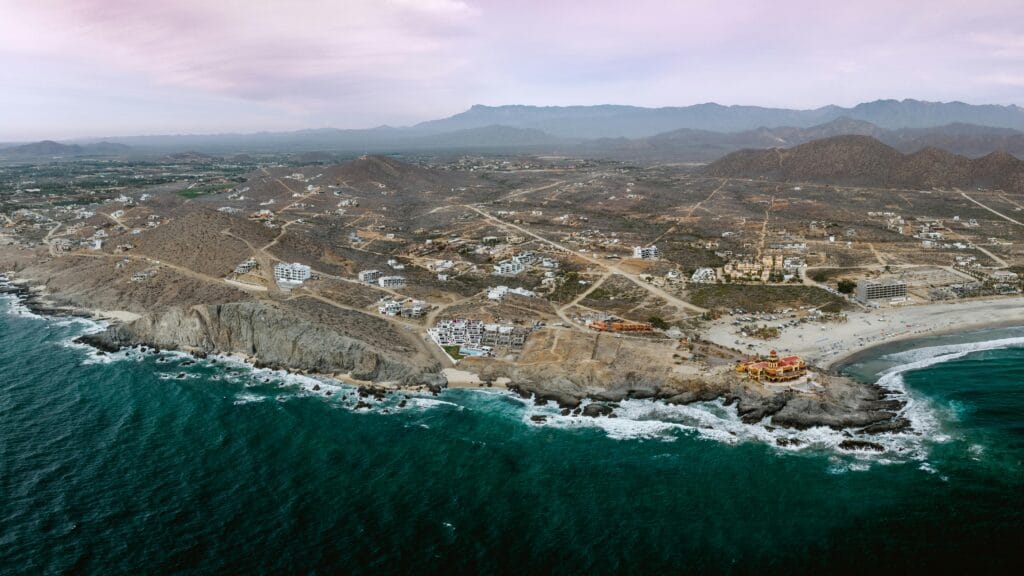
Most of the Pacific coastline between Cabo San Lucas and La Paz is beautiful and completely unsuitable for swimming. Strong shore breaks, riptides, submerged rocks, and unpredictable currents make beach after beach spectacular to look at and dangerous to enter. Locals know this. Travel guides often don’t mention it.
Los Cerritos is the exception.
Tucked between the desert and the Pacific about 20 minutes south of Todos Santos, Cerritos is a wide, crescent-shaped beach with a sandy bottom, a consistent rolling break, and conditions that work for everyone from total beginners to experienced surfers chasing bigger winter swells. It’s one of the only genuinely swimmable beaches on this stretch of coast — and it happens to be one of the best places in all of Mexico to learn to surf.
It doesn’t have a resort. It doesn’t have a velvet rope. It has board rentals, cold beers, fish tacos, and one of the most reliably good waves in Baja.
Getting There
Los Cerritos sits just outside the small community of El Pescadero, about 65 km (40 miles) north of Cabo San Lucas on Highway 19 — roughly 45 minutes from the Los Cabos International Airport (SJD).
From Todos Santos, it’s a 15–20 minute drive south on Highway 19, then a short turn toward the coast. The access road is unpaved but manageable in any standard rental car.
From Cabo San Lucas or San José del Cabo: About 45–60 minutes north on Hwy 19. Straightforward and scenic — the Sierra de la Laguna mountains on one side, Pacific views opening up on the other.
From La Paz: About 90 minutes south on Hwy 19.
A car is essential. There’s no reliable public transport to Los Cerritos, and the surrounding area — El Pescadero, Todos Santos, Punta Lobos — requires wheels to explore properly. Rent at the airport.
Parking: There’s a paid lot directly on the beach, run by the Cerritos Beach Club. Day use costs around $5 USD and includes access to restroom facilities. Overnight parking is available for campers.
The Beach: What to Expect
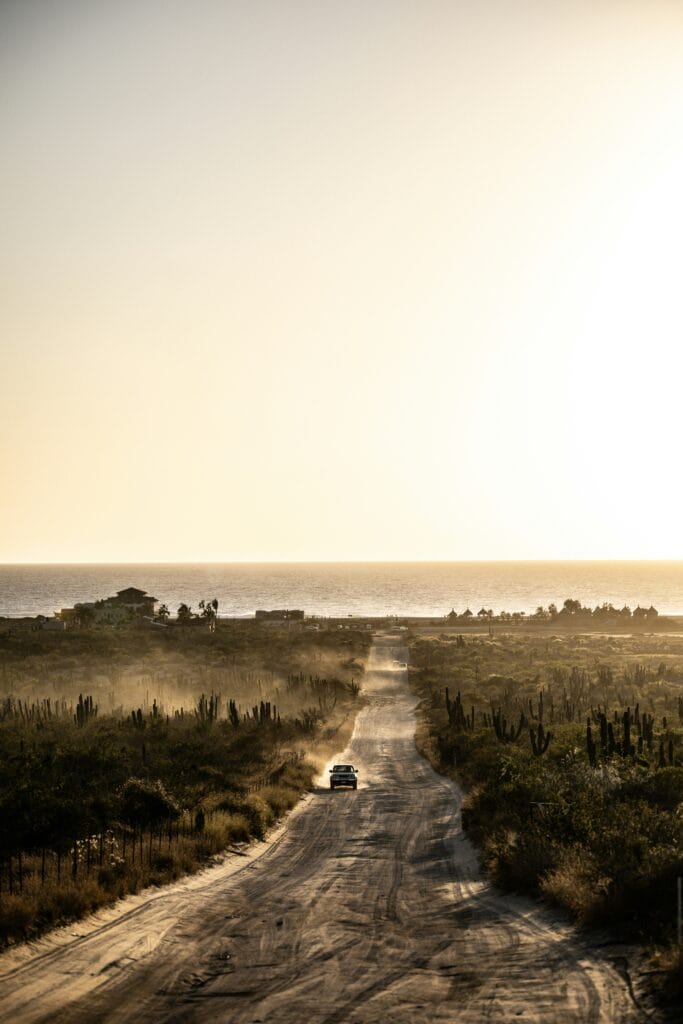
Los Cerritos stretches in a wide arc, backed by low desert scrub and the distant mountains. The sand is fine and golden. The water runs from turquoise in the shallows to deep blue offshore.
What makes it special is the shape of the break. The beach is wide and relatively flat, which creates a graduated surf zone: gentler, smaller waves close to shore for beginners, more powerful sets further out for experienced surfers, and the point break at the northern end where longboarders and intermediate surfers congregate. The different zones naturally separate skill levels, making it unusually calm and unintimidating in the water.
The beach is big enough that even on busy weekends — and peak season weekends do bring crowds — it rarely feels packed. Weekdays outside of December through March are often remarkably quiet.
One important note on the northern rocks: At the far right end of the beach, a rocky formation creates a small pool area that can be good for calmer swimming, particularly in winter when the tide is lower. It’s worth exploring, but be aware of the rocks and always check conditions before wading in.
Surfing Los Cerritos: Everything You Need to Know
This is why most people come, and it delivers.
Skill level: All levels, genuinely. The beach break handles beginners and the point break rewards intermediate and advanced surfers. Cerritos is consistently cited as one of the best places in Mexico to learn — the sandy bottom makes wipeouts forgiving, and the break is staged in a way that naturally separates learners from more experienced riders.
Seasons:
Winter (November–March) brings the most consistent surf and cleanest waves. The tide runs lower in winter, making the water shallower and easier for beginners to navigate. This is also when bigger northwest swells arrive, giving experienced surfers something to work with — waves between November and March can reach up to 12 feet on bigger days, and a wetsuit is recommended as water temperatures drop.
Summer (June–August) brings smaller, gentler waves — ideal for total beginners who want the most forgiving conditions possible. The water is warmer and a rash guard or boardshorts is enough.
Avoid September and October if surf conditions matter to you. Hurricane and tropical storm activity in the shoulder season can make conditions unpredictable and sometimes unsurfable for days at a time.
Board rentals: Available directly on the beach from several operators. Expect to pay around 200–350 MXN per hour for a soft-top longboard, which is what beginners should ask for. Harder boards and shortboards available for more experienced riders. Boogie boards and bodyboards are also rentable for kids and non-surfers who want to play in the waves.
Surf lessons:
Get Stoked Surf School is the standout local operator — Mexican-owned and run by Jibran, a lifelong surfer from Jalisco who has been based in Baja since 2005 and teaching since he was 19. Lessons start with a beach briefing, get you in the water quickly, and include board use for the rest of the day afterward. Small groups, genuinely local spirit. Walk-ups are fine in shoulder season; during peak season (December–March) booking ahead is wise.
Siempre Mar is another well-regarded local school operating from the beach. Both are preferable to the larger, higher-turnover operations.
Pescadero Surf Camp, based just inland, offers lessons, board rentals, and camping accommodation together — a good option if you’re planning multiple days of surfing.
Swimming at Los Cerritos
Los Cerritos is widely considered the only genuinely swimmable beach in the immediate area — a distinction that matters on this stretch of coast. The gentle rolling break and sandy bottom make it appropriate for families, non-surfers, and anyone who just wants to get in the water without anxiety.
That said, the Pacific is still the Pacific. A few guidelines:
- Swim in the central section of the beach where the break is most consistent and predictable
- Check in with surf school staff or beach club staff about current conditions — they’ll tell you straight
- The northern rock area creates calmer water at certain tide levels but requires attention to the rocks
- If in doubt about a rip current, swim parallel to shore rather than against it
- Lifeguards are often on duty during peak season — look for them when you arrive
Children and non-swimmers will generally be comfortable here in a way they won’t be at any of the other beaches around Todos Santos.
Where to Eat & Drink
Cerritos Beach Club The main on-beach restaurant and bar — cold drinks, fish tacos, ceviche, and straightforward Mexican beach food. Tables under palapas with direct sand access. This is the easy, reliable choice for a beach day lunch. Service is casual and unhurried in the best sense.
Hierbabuena (El Pescadero, 5 minutes away) The serious option. A farm-to-table garden restaurant sourcing almost entirely from its own organic farm. Open-air, beautiful, exceptional cooking. More of a destination lunch than a grab-and-go — worth building a morning surf session around finishing here at midday. See the full Todos Santos guide for more detail.
Baja Beans A coffee roastery and café on Highway 19 near El Pescadero, with good food and a great Saturday market. Strong coffee, solid breakfast, and the local gathering point for the resident expat and nomad community. Worth stopping here before heading to the beach.
Beach vendors Throughout the day, vendors walk the beach with fruit, agua fresca, and snacks. Friendly, not pushy, cash only. The sliced mango with chile and lime is the correct choice.
How to Spend a Perfect Day at Los Cerritos
Los Cerritos rewards the early arrival. Here’s how to make the most of it.
7:30 AM — Coffee first Stop at Baja Beans on Highway 19 before turning toward the beach. It’s five minutes out of your way and worth it. The crowd here — surfers, farmers, remote workers, Baja lifers — tells you everything about who’s chosen this stretch of coast.
8:30 AM — Hit the water early The morning glass — when the wind is calm and the surface is clean — typically lasts until 10:00 or 11:00 AM. This is when the waves are at their best and the beach is at its quietest. If you’re taking a lesson, book the earliest slot available.
11:00 AM — Breakfast on the sand The Cerritos Beach Club opens its kitchen mid-morning. Fish tacos, fresh juice, a cold Pacifico if the morning went well. Eat with sand between your toes and watch the sets come in.
1:00 PM — Lunch at Hierbabuena Five minutes up the road in El Pescadero, this farm-to-table garden restaurant is worth the short drive. Everything comes from the property’s own farm. It’s the kind of lunch that reminds you why you travel.
3:00 PM — Afternoon session or beach walk The wind typically picks up in the afternoon, which changes the wave quality but not the scenery. Experienced surfers often prefer the afternoon chop. Everyone else walks the beach north toward the rocks, watches the pelicans, and lets the day decompress.
Sunset — Drive to Todos Santos Twenty minutes north, Todos Santos catches the sunset beautifully from Playa La Cachora and the rooftop bars near the centro. It’s the natural end to a Los Cerritos day — swap your boardshorts for something slightly less sandy and have a mezcal on the plaza.
Making a longer trip of it? Los Cerritos pairs naturally with the Todos Santos cultural scene, the sea turtle releases at Tortugueros Las Playitas (December–February), and humpback whale watching from Punta Lobos (November–March). If you’re drawn to the conservation angle, our guide to volunteering in Mexico covers programs worth knowing about. Three days in this triangle — town, beach, wildlife — is the right amount of time.
Camping at Los Cerritos
The paid parking lot directly behind the beach doubles as a campsite for both RVs and tents, with restroom facilities available. It’s basic — you’re essentially parking on a gravel lot near the beach — but the location is right and the price is right.
For a more comfortable camping experience, Pescadero Surf Camp offers proper tent sites and basic accommodation a short distance from the beach, starting at around $15 USD per night, with surf lessons and board rental on site.
Van life and overlanding travelers use Los Cerritos regularly as a stop on the Baja road trip circuit. The combination of reliable surf, beach camping, and easy highway access makes it a natural rest point on the drive between La Paz and Cabo.
Los Cerritos as a Base: El Pescadero & Todos Santos
Los Cerritos sits in the middle of the small triangle formed by El Pescadero (5 minutes north), Todos Santos (20 minutes north), and the open Pacific. From a base here you can:
- Surf mornings at Cerritos, drive to Todos Santos for galleries, lunch at Jazamango, and a sunset walk in the centro
- Drive north to Todos Santos for the Saturday Mercado Orgánico
- Watch sea turtle releases at Tortugueros Las Playitas (December–February) in the evenings — or consider a longer volunteer program in Mexico if conservation is your thing
- Spot humpback whales from Punta Lobos (November–March) a short drive up the coast
- Day trip to La Paz (90 minutes) for the malecón, sea lion snorkeling, and the best city in Baja California Sur
If Todos Santos is the cultural anchor of this stretch of coast, Los Cerritos is the outdoor anchor. They’re better together.
Frequently Asked Questions About Los Cerritos Beach
Is Los Cerritos good for beginner surfers? It’s one of the best beginner surf beaches in all of Mexico. The sandy bottom is forgiving, the break is consistent and graduated, and there are multiple experienced local surf schools operating directly from the beach. Both the waves and the setup are designed, almost by nature, for learning.
Is Los Cerritos safe for swimming? Yes — it’s one of the only genuinely swimmable beaches on this stretch of Baja’s Pacific coast. The central section of the beach has a rolling break suitable for families and non-surfers. Always check with local surf instructors or beach club staff about current conditions, and follow standard ocean safety practices.
How far is Los Cerritos from Todos Santos? About 15–20 minutes south by car, depending on where you’re coming from in town. The drive is on Highway 19 with a short unpaved turn toward the coast at the end. We’d strongly recommend basing yourself in Todos Santos and treating Los Cerritos as your beach day — the town adds enormous depth to the trip.
How far is Los Cerritos from Cabo San Lucas? Approximately 65 km (40 miles), or about 45–60 minutes north on Highway 19. It makes an excellent day trip from Cabo — arrive early, surf or swim in the morning, eat at the beach club or Hierbabuena, and head back in the afternoon.
What is the best time of year to visit Los Cerritos? November through March for the best surf conditions, cleaner waves, whale sightings offshore, and sea turtle releases nearby. December through April is the optimal window for all-round beach conditions. Summer brings warmer water and smaller waves — still good for total beginners, less interesting for experienced surfers.
Can you camp at Los Cerritos? Yes. There’s a basic campsite in the paid parking lot directly behind the beach with restroom access. Pescadero Surf Camp nearby offers a more organized camping experience with surf lessons included. The area is popular with van life travelers and RVers on the Baja circuit.
Do I need a wetsuit at Los Cerritos? In winter (November–March), water temperatures drop enough that a shorty or full wetsuit is recommended — especially for longer sessions. In summer, boardshorts or a rash guard is sufficient. Surf schools and rental shops have wetsuits available.
Is there parking at Los Cerritos? Yes — there’s a paid lot directly on the beach for around $5 USD per day, including restroom access. It also allows overnight camping.
Most of the Pacific coastline between Cabo San Lucas and La Paz is beautiful and completely unsuitable for swimming. Strong shore breaks, riptides, submerged rocks, and unpredictable currents make beach after beach spectacular to look at and dangerous to enter. Locals know this. Travel guides often don’t mention it.