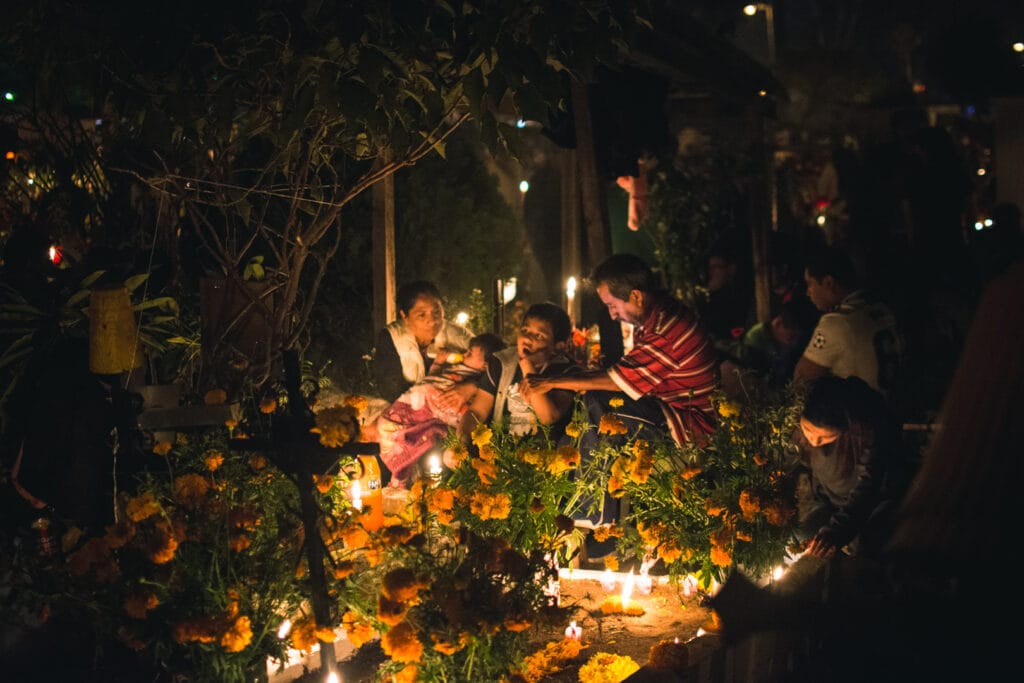
There is a moment, sometime after midnight in the Xoxocotlán cemetery, when the full weight of what you’re witnessing settles in.
The graves glow with thousands of candles. Marigold petals trace luminous paths from the cemetery gates to individual plots, guiding the spirits home by scent and color. Families sit together — grandparents, parents, children — talking quietly, eating, playing music for the dead. The air smells of copal incense and cempasúchil flowers. Somewhere nearby, a brass band plays a song the deceased apparently loved.
This is not a performance. There are no tickets. The families sitting with their loved ones’ graves don’t need you there — but most will smile if your eyes meet, and some will offer you food.
Día de los Muertos in Oaxaca is the most profound cultural experience Mexico offers. Not the most spectacular — though it is spectacular. Not the most photographed — though it is endlessly photogenic. The most profound, because it asks you to sit with death differently: not as an ending to grieve, but as a cyclical passage to celebrate, and a reason to gather.
This guide covers everything you need to experience it properly — and respectfully.
What Día de los Muertos Actually Is (And What It Isn’t)
Let’s clear up the most common misconception first: Día de los Muertos is not Mexican Halloween. The dates overlap — October 31 through November 2 — but the origins, the meaning, and the experience are entirely different.
The holiday has roots stretching back at least 3,000 years to pre-Hispanic Mesoamerican traditions honoring the dead. The Aztecs, Zapotecs, and other indigenous civilizations viewed death not as an ending but as a stage in a continuous cycle — the dead could return, communicate with the living, and be nourished by offerings. When Spanish colonizers arrived in the 16th century, Catholic observances of All Saints’ Day (November 1) and All Souls’ Day (November 2) merged with these existing indigenous traditions. The result was something neither fully Catholic nor fully pre-Hispanic — distinctly Mexican, and recognized by UNESCO in 2008 as an Intangible Cultural Heritage of Humanity.
In Oaxaca, with its deep Zapotec and Mixtec roots, the celebration is considered among the most authentic and spiritually intact in all of Mexico. This isn’t the city’s biggest tourist event repurposed from an ancient tradition. It’s a living family practice that has continued uninterrupted for centuries, and which has simply become visible to the wider world.
The Tradition: What’s Happening and Why
Understanding a few key elements transforms the experience from visually interesting to genuinely moving.
The Ofrenda (Altar) The ofrenda is the centerpiece of Día de los Muertos — a home altar built to welcome the spirits of deceased family members back for their annual visit. Every item has meaning: marigold flowers (cempasúchil) whose vivid orange color and strong scent guide the spirits home; candles to light the path; photographs of the deceased; their favorite foods and drinks; copal incense to carry prayers; papel picado (cut paper banners) to represent the fragility of life. Salt for purification. Water to quench the spirit’s thirst after the journey.
Building the ofrenda is a family act — preparations begin days in advance, and the altar is tended throughout the celebration.
The Spirits’ Return According to tradition, the gates of the underworld open at midnight on October 31. The spirits of children (angelitos) return first, on November 1. The spirits of adults follow on November 2. Families prepare specifically for these arrivals — cooking the deceased’s favorite foods, playing their music, gathering at their graves.
The Cemeteries This is where the celebration becomes extraordinary. On the nights of November 1 and 2, families gather at the cemeteries where their loved ones are buried. Graves are cleaned, decorated with marigolds, candles, and the deceased’s favorite items. Families bring food, mezcal, music. They stay for hours — sometimes all night. The cemeteries become luminous, fragrant, improbably joyful gathering places. The atmosphere is spiritual and social simultaneously — grief and celebration occupying the same space without contradiction.
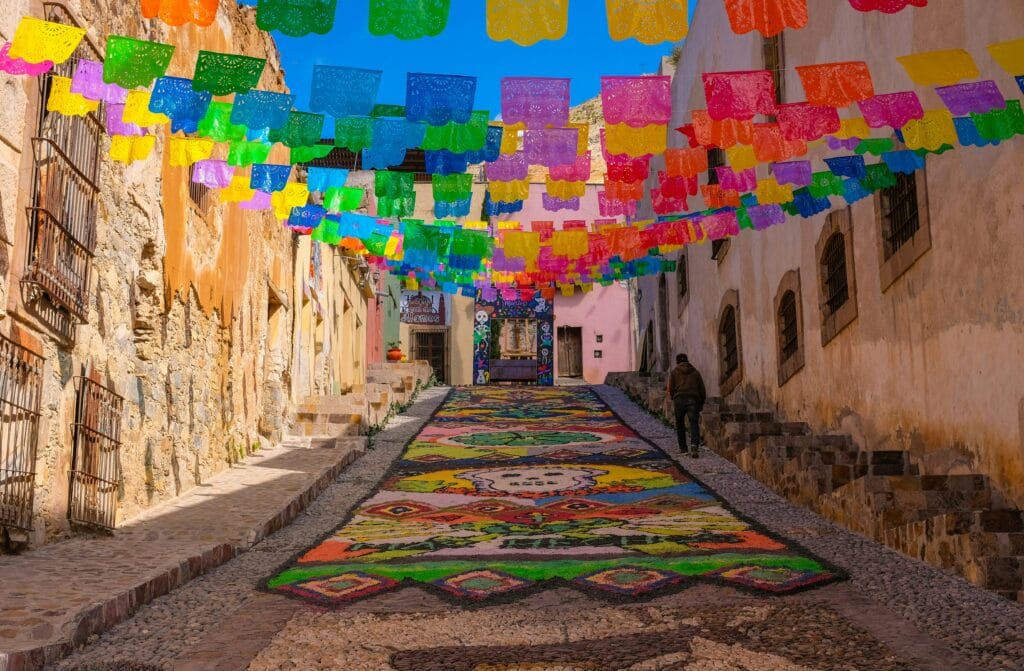
Tapetes de Arena (Sand Rugs) Unique to Oaxaca, these intricate sand tapestries are created on the ground using colored sand, flowers, and dried beans. They depict scenes related to death, the deceased, or cultural traditions — and sometimes the cause of death, in a characteristically Mexican expression of dark humor and acceptance. The best collection can be seen at the Museo de los Pintores Oaxaqueños during the festival.
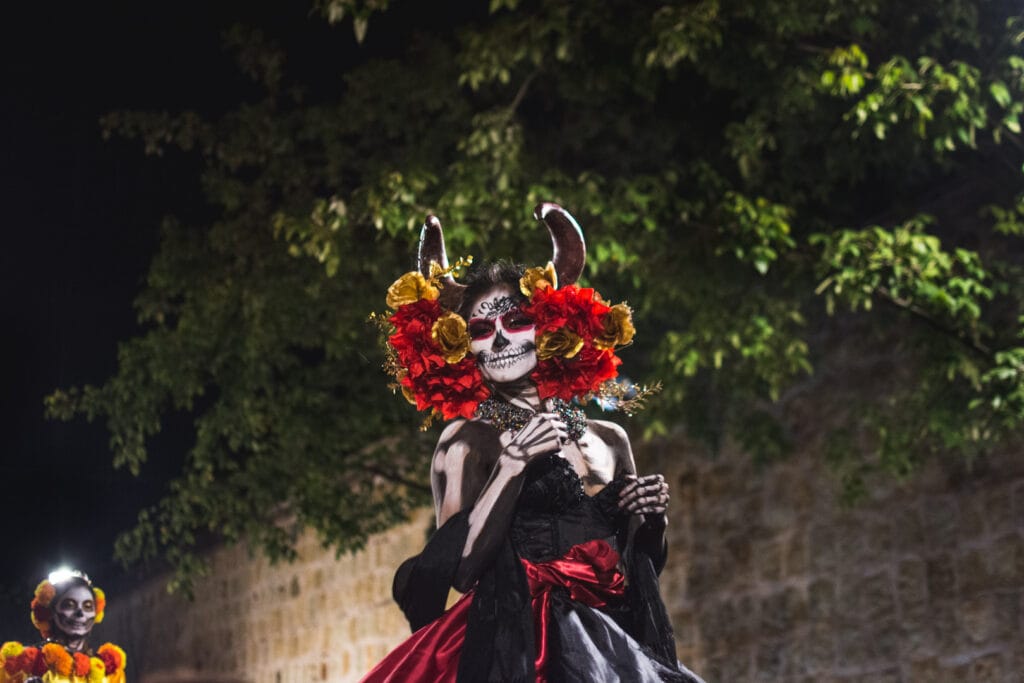
Comparsas (Parades) Throughout the week, neighborhood groups organize comparsas — processional parades with costumed participants, brass bands, mojigangas (giant papier-mâché figures), and dancing. They move through the city streets at all hours, loud and celebratory, picking up followers as they go. The main city comparsa on November 1 is the largest — starting near the Fuente de las Ocho Regiones and moving through the historic center — but smaller neighborhood comparsas happen daily throughout the week.
When to Go: The Full Festival Calendar
Día de los Muertos officially spans October 31 to November 2, but in Oaxaca the celebrations extend for a full week on either side. If you can only come for the official days, come. But if you can arrive earlier, the build-up is part of the experience.
October 24–29: Cultural warm-up events begin. Altar-building workshops, sand tapestry installations, and the first neighborhood comparsas. The city is visibly transforming — marigold vendors appear on every street, bakeries fill with pan de muerto (the traditional sweet bread of the dead), and the pace of life shifts noticeably.
October 30 — Verbena Xandú: Food stalls, mariachis, and early calendas (candlelit processions) fill the streets around the Zócalo. This is one of the more festive pre-celebration evenings — very accessible, very local.
October 31 — Spirits of Children Arrive: The gates open at midnight. Many families have already decorated home altars. Smaller comparsas move through the streets. The cemetery atmosphere begins building in the afternoon.
November 1 — Día de los Inocentes / All Saints’ Day: The main city comparsa in the evening — the most spectacular parade of the week. Cemeteries fill after dark for the vigil honoring children’s spirits. Pantéon General and San Miguel Cemetery are the most visited by travelers.
November 2 — Día de los Muertos / All Souls’ Day: The quieter, more reflective day — the spiritual heart of the festival. Adult spirits are welcomed. Cemetery vigils continue, though with a more meditative tone than the previous night. Many families visit churches in the morning before returning to the cemeteries.
November 3: Wind-down celebrations. The spirits have departed. Many families dismantle their altars gradually over the following days, sharing the food offerings with neighbors.
The Cemeteries: A Guide to Visiting Respectfully
The cemetery experience is the reason most travelers come to Oaxaca for Día de los Muertos — and the part that requires the most care and awareness.
Which cemeteries to visit:
Pantéon General (Panteón Municipal) — The largest and most central cemetery in Oaxaca City. Extremely atmospheric on the nights of November 1 and 2, with thousands of candles and families throughout. The scale here is overwhelming in the best sense. The most accessible option for first-time visitors.
San Miguel Cemetery (Xoxocotlán) — About 20 minutes from the city center, this is considered by many to be the most visually extraordinary — particularly for the sea of candlelight on the night of November 2. Requires transport (taxi or tour), but the atmosphere justifies it entirely.
Xochimilco Cemetery — Within Oaxaca City, slightly less touristed than Pantéon General. The neighborhood feel here is more intimate — you’re more likely to be the only non-local in a particular section.
How to visit respectfully:
Move quietly. Speak softly. Ask before photographing anyone, and accept “no” graciously — these are private family moments made semi-public by geography, not invitation. Never step over graves or disturb offerings. If a family makes eye contact and gestures for you to come closer, they’re extending a genuine welcome — accept it warmly.
Don’t just photograph. Sit for a while. Let the experience register without the lens between you and it.
If you’re uncertain about visiting independently — particularly at the village cemeteries — a guided tour with a knowledgeable local guide provides both context and appropriate entry points. Tour operators like Coyote Aventuras and Where Sidewalks End run small-group cemetery tours that are well-regarded for their cultural sensitivity.
The Villages: Where the Traditions Run Deepest
Oaxaca City’s celebrations are extraordinary. The surrounding valley villages offer something different — smaller in scale, more intimate, and in many cases preserving traditions that have been diluted in the city.
Xoxocotlán — A short drive from the city, Xoxocotlán’s cemetery is famous for its candlelit atmosphere and the warmth with which it receives visitors who come respectfully. One of the most photographed locations during the festival.
Teotitlán del Valle — The famous weaving village (see our Oaxacan culture guide) celebrates Día de los Muertos with particular depth, including elaborate home altars and village-wide ceremonial food traditions. The market here during festival week is exceptional.
Zaachila — About an hour from the city, Zaachila is known for its remarkable sand tapestries and a cemetery celebration that remains genuinely local in feel. Worth the drive for those who want distance from the main tourist circuit.
San Antonino Castillo Velasco — Famous for its flower market and for the elaborate floral arrangements families bring to the cemetery. The approach roads are lined with marigold vendors for days before the festival.
Etla — The village of Etla holds one of the most dramatic comparsas outside the city — the muerteada, which is longer and more traditionally structured than the city version. If you’re spending multiple days in the area, this is worth organizing transport for.
What to Eat During Día de los Muertos
The foods of Día de los Muertos are inseparable from the ritual — many dishes appear on ofrendas before they reach the table.
Pan de Muerto — The sweet, anise-flavored bread decorated with bone-shaped dough is the defining food of the season. Bakeries begin producing it weeks in advance. Buy one every day. They’re best warm.
Mole Negro — The most ceremonial of Oaxaca’s seven moles is traditionally prepared for Día de los Muertos celebrations, served over turkey. If you’ve never had a proper mole negro, this is the week to have it. See our complete guide to Oaxacan food for context.
Tamales — Particularly corn tamales wrapped in banana leaves, which appear on altars and at family tables throughout the festival. The corn represents earth — one of the four sacred elements present on every ofrenda.
Chocolate Caliente — Hot chocolate made from Oaxacan cacao, thickened and spiced, served at cemetery vigils and street stalls throughout the night. There is no better version of hot chocolate anywhere on earth.
Mezcal — Present at virtually every altar and vigil. The deceased’s preferred brand, if known. A small glass left as an offering, another poured for the living. The Oaxacan approach to mezcal is never frivolous — it’s ceremonial.
Atole — A warm corn-based drink, sometimes flavored with chocolate or fruit, that appears at cemetery vigils and community gatherings throughout the celebration.
Practical Planning: What You Need to Know
Book accommodation months in advance. This cannot be overstated. Oaxaca City fills up completely for Día de los Muertos — hotels, guesthouses, and Airbnbs across all price points book out by July or August. If you’re planning to come, book accommodation before you book flights.
Expect higher prices. Accommodation rates roughly double or triple during festival week. Budget accordingly and don’t expect to negotiate.
Arrive before October 31. Arriving on November 1 means missing the build-up, the altar installations, the early comparsas, and the gradual transformation of the city. Arriving October 28 or 29 puts you there for the full arc of the celebration. If you can only come for two days, make them November 1 and 2.
Getting to Oaxaca: Fly into Oaxaca International Airport (OAX) — direct flights from Mexico City (1 hour), and connections through CDMX from most major US cities. Alternatively, overnight bus from Mexico City (approximately 7 hours) is comfortable and affordable. See our Soul of Oaxaca guide for full arrival logistics.
Getting around during the festival: The historic center streets are closed to traffic on major celebration nights. Walk everywhere in the centro. For the village cemeteries and outlying celebrations, pre-arrange transport with your hotel or book a tour — taxis are scarce on the busiest nights.
Photography: Bring a camera with good low-light capability — the cemetery experiences are by candlelight, and a phone camera will struggle. That said: read the room before raising any camera. The experience of being present without photographing it is often the better one.
What to wear: Dress respectfully for cemetery visits — covered shoulders, nothing too revealing. Catrina-style face paint is enthusiastically welcomed on visitors, particularly for comparsa participation. You’ll find face-painting vendors throughout the city during the festival.
Día de los Muertos vs. Halloween: The Most Important Distinction
Travelers sometimes arrive expecting a Halloween-adjacent party. A few important clarifications:
Día de los Muertos is a family and community observance with deep spiritual significance. The cemetery vigils are not performances. The altars in homes are not decoration. The families gathered with their loved ones’ graves are not there for your camera.
This doesn’t mean visitors aren’t welcome — they very much are, in most contexts. It means arriving with appropriate awareness of what you’re witnessing. The most memorable Día de los Muertos experiences happen when travelers show up as respectful witnesses rather than spectators at a show.
The comparsas are genuinely celebratory — join them. The street food and mezcal are abundant — enjoy them. The ofrendas displayed in public spaces are meant to be seen — look carefully. The cemeteries require a different mode: quiet presence, genuine respect, and camera restraint.
Sample Itinerary: 5 Days in Oaxaca for Día de los Muertos
Day 1 (October 29): Arrive & Orient Check in, walk the historic center, find the marigold vendors setting up along Macedonio Alcalá. Visit the Mercado Benito Juárez for ingredients and a look at how the city is preparing. Dinner at Los Pacos with mole negro. Early night — the next four days will be long ones.
Day 2 (October 30): Cultural Immersion Morning visit to Monte Albán — the Zapotec ruins take on additional resonance during Día de los Muertos week when the connection between ancient death traditions and the living celebration is tangible. Afternoon: sand tapestry viewing at Museo de los Pintores Oaxaqueños. Evening: Verbena Xandú around the Zócalo — food stalls, music, the city at its most festive pre-celebration self.
Day 3 (October 31): Altars & First Comparsa Morning altar-building workshop — several cultural organizations offer these for visitors, providing genuine hands-on context for what you’ll see in the cemeteries. Afternoon: walk the city looking at public ofrendas in hotels, galleries, and public buildings. Evening: follow one of the neighborhood comparsas through the streets of Jalatlaco.
Day 4 (November 1): The Main Comparsa & Cemetery Night Rest in the morning — tonight will be long. Late afternoon: the main city comparsa begins. Follow it through the centro. After midnight: Pantéon General or Xoxocotlán cemetery for the candlelit vigil. Stay for at least an hour. Let it settle.
Day 5 (November 2): The Reflective Day The official Day of the Dead. Morning church visits across the city are worth witnessing. Afternoon: day trip to Teotitlán del Valle for the village celebration and market. Evening: return to a cemetery — the atmosphere tonight is quieter, more meditative, and in some ways more affecting than the previous night’s spectacle.
Frequently Asked Questions About Día de los Muertos in Oaxaca
When is Día de los Muertos in Oaxaca? Officially October 31 through November 2, with November 1 and 2 being the main celebration days. In Oaxaca, festivities begin building from around October 24 and continue through November 3. For the fullest experience, arrive by October 28–29.
Is Día de los Muertos in Oaxaca appropriate for tourists to attend? Yes — visitors are genuinely welcomed, particularly at public celebrations, comparsas, and the cemetery vigils. The key is arriving with respect and cultural awareness rather than a party mentality. The families at cemetery vigils are participating in a private family ritual that happens to take place in a public space. Observe quietly, ask before photographing, and follow the lead of those around you.
Is it disrespectful to wear Catrina face paint as a tourist? No — Catrina face painting for visitors is enthusiastically welcomed in Oaxaca during the festival. Street vendors offer face painting throughout the city. It’s seen as respectful participation, not cultural appropriation.
Do I need to book a tour or can I explore independently? Both work well. The city celebrations — comparsas, public altars, Pantéon General — are easily explored independently. For village cemeteries and deeper cultural context, a knowledgeable local guide adds significant value. Coyote Aventuras and Where Sidewalks End are two well-regarded operators known for culturally sensitive, small-group experiences.
How far in advance should I book accommodation? As early as possible — ideally 4–6 months ahead. October through early November in Oaxaca is fully booked by August at the latest for quality accommodation. Don’t wait.
What is the difference between Día de los Muertos in Oaxaca vs. Mexico City? Both are extraordinary. Mexico City’s celebration is larger and more theatrical — the annual parade through the Paseo de la Reforma is a major production. Oaxaca’s celebration is considered more spiritually rooted and culturally authentic, with a stronger connection to indigenous Zapotec and Mixtec traditions. The village cemetery vigils around Oaxaca have no equivalent in Mexico City.
Is it safe to be out late at night during Día de los Muertos in Oaxaca? Yes — the streets of the historic center are extremely busy and well-populated throughout the nights of November 1 and 2, which naturally creates safety in numbers. Take the same precautions you would in any crowded urban environment: keep valuables secure, stay aware of your surroundings, and pre-arrange transport home if you’re visiting the outlying village cemeteries late at night.
What should I bring to the cemetery visits? Comfortable walking shoes, a light layer for late-night chill, and a camera with good low-light capability if you plan to photograph (with permission). Consider bringing marigolds — you’ll see them sold everywhere — as a small, appropriate gesture if a family invites you closer to their ofrenda.
Can I participate in Día de los Muertos, or just observe? You can genuinely participate — joining comparsas, attending public altar-building workshops, having your face painted, eating the ceremonial foods, attending community events. The cemetery vigils are best approached as respectful observation rather than participation, unless you’re explicitly invited to join a family gathering.